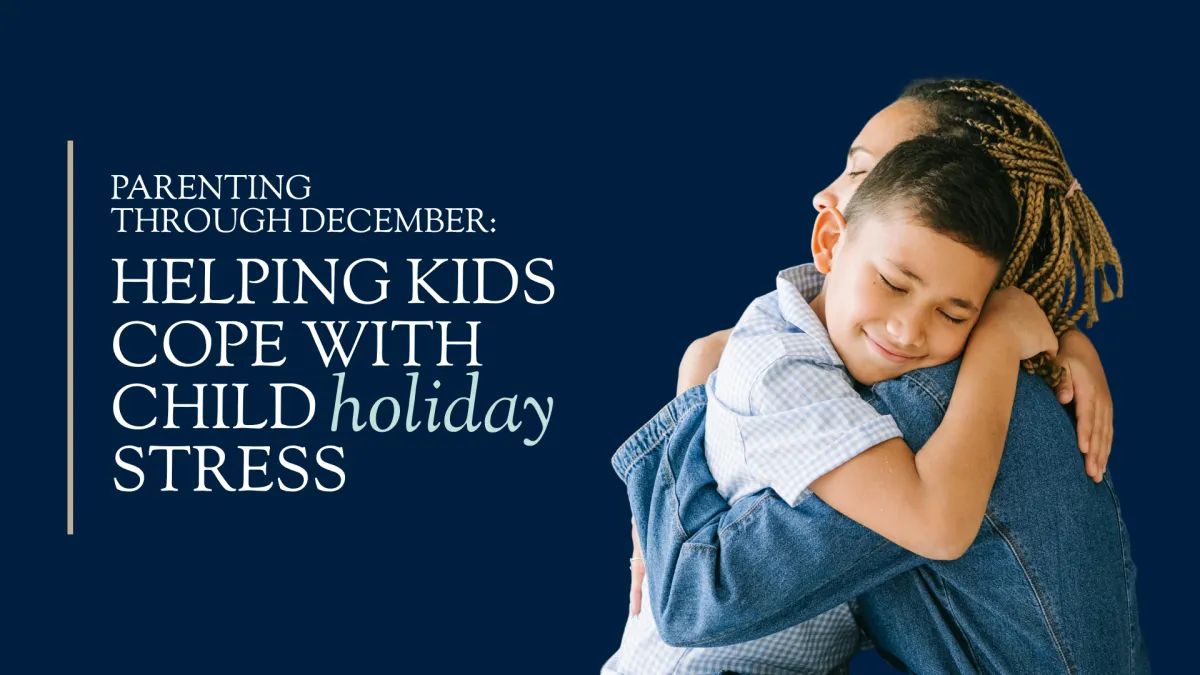
Parenting Through December: Helping Kids Cope With Child Holiday Stress
The holidays may feel magical, but for many families, December also brings unexpected challenges. Routines shift, schedules fill up, and emotions run high — and children feel it intensely. Child holiday stress is more common than most parents realize, especially when excitement mixes with overstimulation, disrupted sleep, and social pressure.
When kids become overwhelmed, it can show up as tears, irritability, meltdowns, or withdrawal — not because they’re ungrateful, but because their nervous systems are working overtime.
Why Kids Experience Holiday Stress
Adults often forget how much structure and predictability matter to children.
During the holidays, everything changes at once:
later bedtimes
travel plans
unfamiliar environments
crowded events
sugary foods
gifts and expectations
social gatherings with relatives they barely know
These shifts make child holiday stress almost unavoidable. Kids don’t always have the language to express overwhelm, so they communicate through behavior.
Common triggers include:
overstimulation from noise and lights
pressure to perform or behave perfectly
uncertainty around new routines
emotional contagion (absorbing adults’ stress)
sensory sensitivity
separation anxiety during events
Their little bodies feel big feelings — and they need guidance, not judgment.
Signs Your Child Is Experiencing Holiday Stress
Kids rarely say, “I’m overwhelmed.” Instead, child holiday stress shows up through:
increased tears or irritability
clinginess or sudden withdrawal
stomachaches or headaches
trouble falling or staying asleep
meltdowns during or after events
refusal to participate in activities
anger over small things
difficulty transitioning between plans
These signals aren’t misbehavior — they’re communication.
Overstimulation: The Hidden Cause of Holiday Meltdowns
Holiday events are full of sensory overload:
loud music
bright lights
multiple conversations happening at once
unfamiliar faces
unexpected gifts and reactions
tight schedules
For sensitive children — and even children who aren’t usually reactive — this can be too much.
Child holiday stress often peaks when their sensory system hits its limit, and a meltdown becomes their nervous system’s way of saying, “I can’t process any more.”
How Parents Can Support Their Child Through Holiday Stress
Supporting your child doesn’t require perfection — it requires presence, empathy, and realistic expectations.
Here’s how to help:
1. Protect Their Routines Whenever Possible
Regular meals, naps, and bedtimes support emotional regulation. Predictability calms the brain.
2. Prepare Kids for What’s Coming
Walk them through the day:
“First we’ll visit Grandma, then we’ll open gifts, then we’ll have lunch.”
Predictability reduces child holiday stress dramatically.
3. Build in Quiet Breaks
Find a calm room or take a short walk.
Children need sensory resets, just like adults do.
4. Lower the Pressure
Kids don’t have to perform — they don’t need perfect manners, perfect reactions, or perfect gratitude.
They need support.
5. Validate Their Feelings
Instead of:
“You’re fine.”
Try:
“It looks like this is a lot right now. Let’s take a break together.”
Validation helps children regulate faster.
6. Manage Your Own Stress First
Kids absorb our emotional energy.
When parents regulate themselves, child regulation becomes easier too.
Why Some Kids Struggle More Than Others
Child holiday stress impacts children differently depending on age, personality, and emotional development.
Kids more prone to stress include:
highly sensitive children
children with ADHD
autistic children
children with anxiety
kids who have experienced family changes
children who rely heavily on routine
Their stress responses aren’t defiance — they’re biology.
Creating a Calmer December for Your Family
You don’t have to attend every event or create a “perfect” holiday.
Children remember connection, not chaos.
They thrive when parents slow down, simplify, and meet their emotional needs with warmth and patience.
Child holiday stress can be an opportunity to teach emotional intelligence, build resilience, and strengthen your bond — one supportive moment at a time.
Take the Next Step
If child holiday stress is affecting your child’s emotions, behavior, or confidence, support is available. A therapist can help your child understand their feelings and develop healthy coping skills for the holidays and beyond.
👉Book your appointment today and help your child navigate December with calm, confidence, and support.
