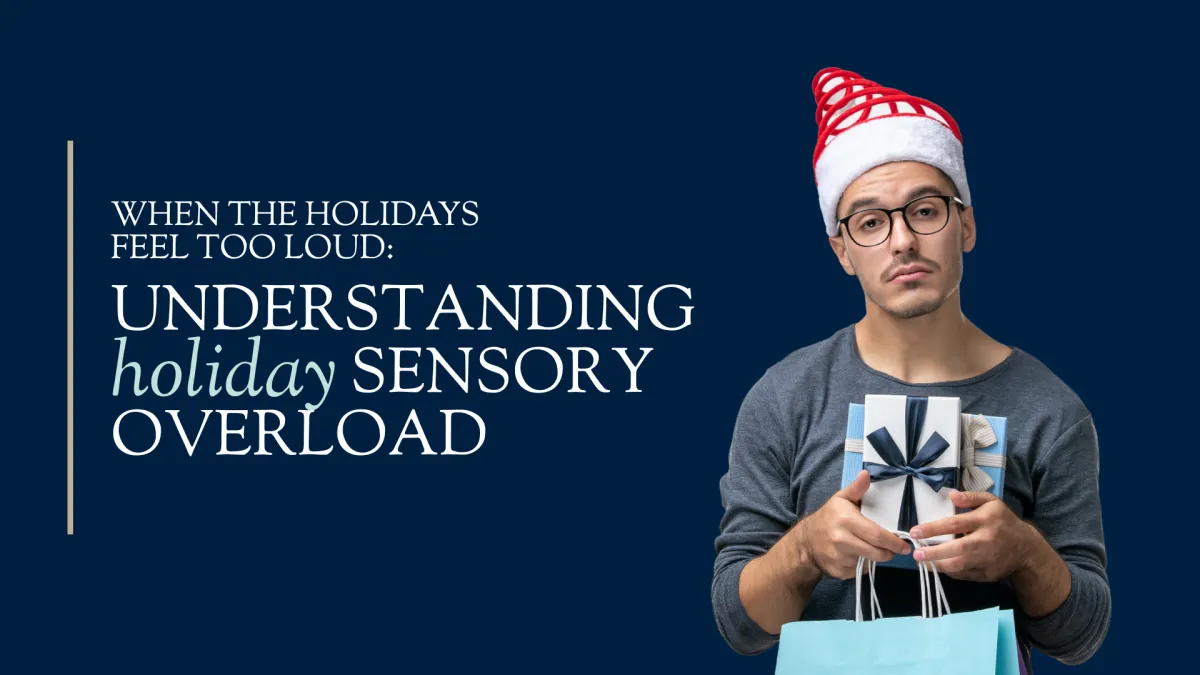
When the Holidays Feel Too Loud: Understanding Holiday Sensory Overload
For many people, the holiday season brings moments of joy — lights, music, gatherings, and celebrations. But for others, holiday sensory overload makes this same environment feel overwhelming, chaotic, or even draining.
When sound, light, movement, and social pressure all rise at the same time, your nervous system can struggle to keep up. If you’ve ever felt exhausted after a holiday event, needed to “hide” for a moment of quiet, or felt irritable without knowing why, sensory overload may be the reason.
What Is Holiday Sensory Overload?
Holiday sensory overload happens when your brain receives more stimulation than it can process comfortably. The holidays intensify nearly every sensory input — brighter lights, louder music, bigger crowds, stronger smells, constant social interaction, and multiple expectations happening at once.
This overwhelm can create:
irritability or mood swings
sudden fatigue
feeling “checked out”
difficulty focusing
headaches or muscle tension
the urge to withdraw or shut down
It’s not a flaw — it’s a natural response of a nervous system under pressure.
Why Some People Are More Sensitive During the Holidays
Not everyone experiences holiday sensory overload the same way. Certain groups may be more sensitive to overstimulation, including:
Introverts who need quiet space to reset
Highly sensitive people (HSPs) who absorb emotional and environmental cues deeply
Individuals with ADHD or anxiety whose nervous systems are already working hard
Autistic children and adults who process sensory input differently
Parents, especially those juggling routines, noise, and constant demands
The added layers of holiday obligations — shopping, social events, cooking, school programs — only increase the strain.
Common Holiday Situations That Trigger Sensory Overload
You may notice holiday sensory overload during:
crowded malls or busy streets
family gatherings with multiple conversations happening at once
loud holiday music or chaotic environments
bright or flashing lights
disrupted routines, late nights, or unpredictable schedules
overstimulating children’s events or school programs
What looks festive to others may feel overwhelming to someone with a sensitive nervous system.
The Emotional Impact of Holiday Sensory Overload
Sensory overload isn’t just physical — it affects emotions too.
It can lead to:
sudden anxiety
irritability or impatience
shutting down during conversations
feeling guilty for not enjoying the moment
needing to isolate to prevent overwhelm
For some, the pressure to “be cheerful” during the holidays makes the experience even more draining.
This is why understanding holiday sensory overload is so important — it helps you respond with compassion instead of self-judgment.
How to Cope With Holiday Sensory Overload
Managing holiday sensory overload doesn’t mean avoiding celebrations. It means approaching them with awareness and boundaries that protect your well-being.
Here are supportive strategies:
Create quiet breaks. Step outside, sit in your car, or find a calm room to reset.
Limit your calendar. Choose quality moments over quantity.
Use grounding techniques. Slow breathing, weighted blankets, or sensory tools can help regulate your nervous system.
Communicate your needs. It’s okay to say, “I need a quick moment to recharge.”
Prepare children ahead of time. Set expectations, bring comfort items, and monitor signs of overstimulation.
Listen to your body. Overwhelm is a signal, not a failure.
Small adjustments can create big relief.
You’re Not Alone
If you struggle with holiday sensory overload, it doesn’t mean you’re “too sensitive” or “not festive enough.” It means your nervous system is sending a message — one rooted in biology, not personality.
With understanding, boundaries, and support, you can participate in the holidays without losing your emotional balance.
Take the Next Step
If holiday sensory overload is affecting your well-being or your family’s ability to enjoy the season, professional support can help you understand your nervous system, build coping strategies, and feel grounded again.
👉Book your appointment today and step into the holidays with clarity, calm, and confidence.
